
Most quotes for a leaking garage or extension roof still include roofing felt as the cheapest line item on the page. That’s not by accident — it’s the material that’s covered more flat roofs in the UK than anything else since the 1960s, and it’s still sold in every builders’ merchant from Cornwall to Carlisle. But cheap upfront and cheap over time aren’t the same thing, and that gap is exactly where most homeowners get caught out.
Roofing felt is a bitumen-based sheet material, reinforced with fibreglass or polyester, that’s bonded in overlapping layers to form a waterproof covering on flat or low-pitch roofs. It’s been the default choice for garages, sheds, dormers and extensions for decades, largely because it’s fast to fit and doesn’t need specialist tools beyond a gas torch or, on newer self-adhesive versions, none at all.
What Roofing Felt Actually Is?
There’s some confusion worth clearing up early. Roofing felt can mean three genuinely different products, and mixing them up is where a lot of bad decisions start.
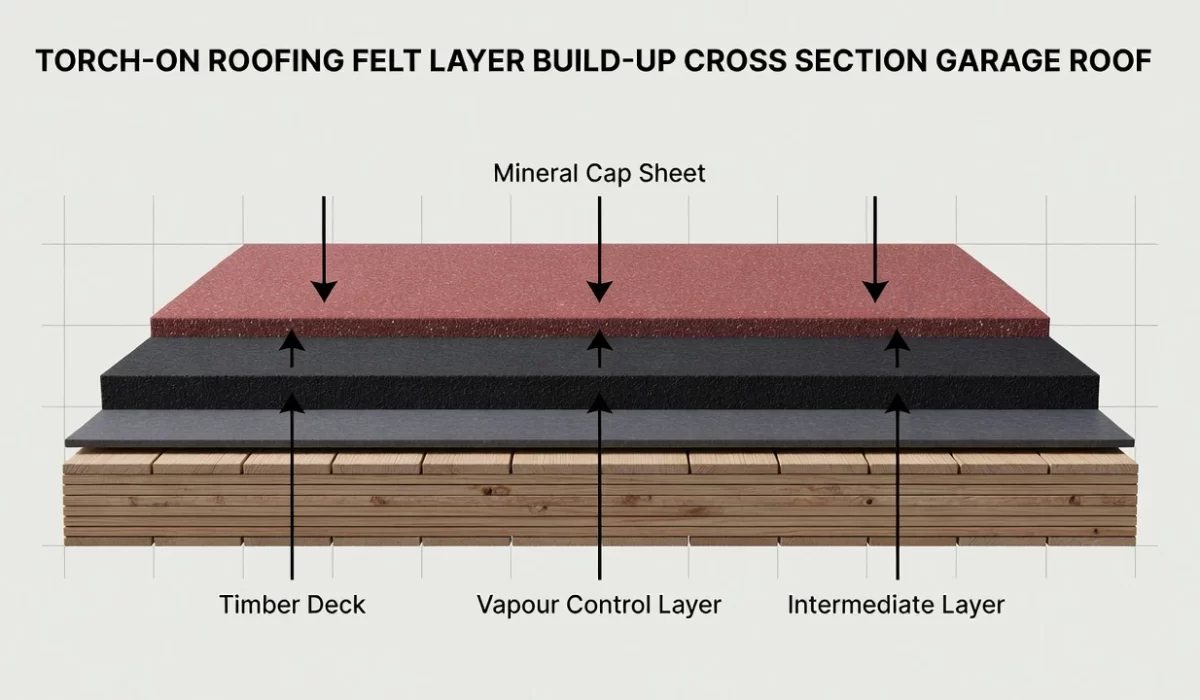
Traditional built-up felt is the three-layer system — a vapour control layer, an intermediate layer, and a mineral-finished cap sheet — bonded together with hot bitumen. This is the older method and it’s what most people picture when they hear the term.
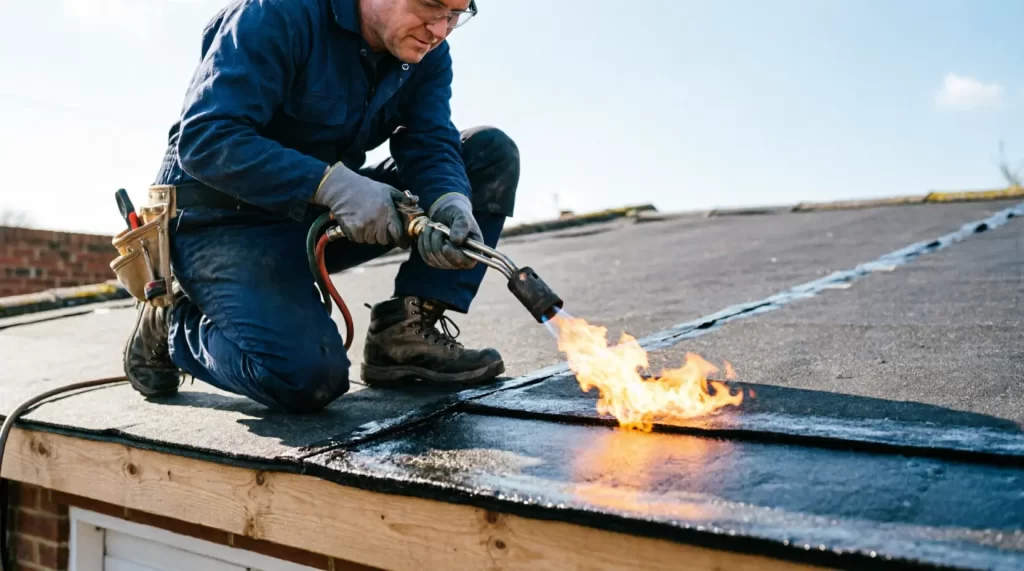
Torch-on felt (also called modified bitumen) uses fewer layers, typically two, heat-welded with a gas torch rather than mopped-on hot bitumen. It’s quicker to install and has largely replaced the traditional built-up method on smaller domestic jobs.
Self-adhesive roofing felt skips the flame entirely. The underside has a peel-off backing with a factory-applied adhesive, which makes it a genuine option for anyone tackling a shed or small garage roof themselves — though contractors who fit this daily know it’s less forgiving of a cold or damp deck than the torch-on version.
For this article, we’re focused on the torch-on and traditional built-up systems used on garages, extensions and dormers, since that’s what the term overwhelmingly refers to for UK homeowners searching for pricing and installation detail.
How Roofing Felt Is Actually Specified and Installed
A proper roofing felt job isn’t just rolling material out and hoping for the best. Anyone who’s re-roofed a garage while the rest of the property stayed occupied knows the sequence matters as much as the material.
Deck preparation. The felt goes down on a timber deck, usually 18mm WBP plywood or OSB3, that needs to be dry, sound, and free of movement. Rotten decking underneath old felt is the single most common surprise once the old covering comes off — and it’s rarely mentioned in the initial quote until the roofer’s actually up there.
Falls and drainage. BS 6229, the code of practice for flat roofs with continuously supported coverings, calls for a minimum fall to stop water pooling. A felt roof laid dead flat will hold standing water, and standing water is what accelerates every other failure on the list.
Layer build-up. For a traditional three-layer system, the first layer (vapour control) is bonded to the deck, the intermediate layer bonded to that, and the mineral cap sheet torched or bonded on top, with each layer’s joints staggered so they don’t line up and create a weak seam.
Detailing at edges and upstands. This is where roofing felt jobs fail most often in practice. Verges, abutments to brickwork, and any upstand need proper lap and headlap — the amount by which one sheet overlaps the next — or wind-driven rain finds its way underneath within a couple of winters.
Skirtings and trims. Aluminium or lead trims finish the perimeter and stop the felt edge from lifting in wind. Skipping this step to save an hour of labour is one of the most common shortcuts on a bodged felt job, and it’s usually the first thing to go wrong.
What the Data Shows
There isn’t a single published UK-wide average cost for roofing felt because pricing swings so much on access, roof size and regional labour rates. But the pattern across current UK trade cost guides for 2026 is consistent enough to work from.
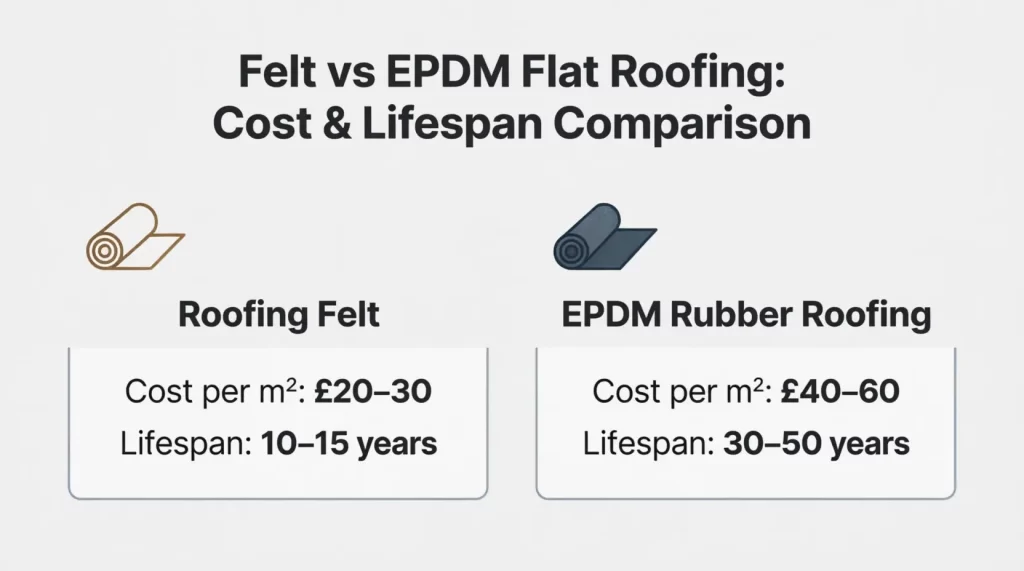
Fully-fitted torch-on roofing felt typically runs somewhere in the £40–£70 per m² range, making it the cheapest of the common flat roof coverings — usually £20–£60 per m² less than EPDM rubber and considerably less than GRP fibreglass. For a single garage of around 15–18m², that puts a full re-felt at roughly £700–£1,500 supplied and fitted, depending on deck condition and access.
The trade-off shows up in lifespan. Roofing felt is generally rated at 15–20 years, sometimes stretching toward 25 with a well-specified system and regular maintenance, against 30–50 years for a correctly installed EPDM membrane. Roofing contractors who quote both materials side by side report that customers increasingly ask about the lifetime cost comparison rather than just the upfront figure — and the maths is straightforward enough that most people work it out fast: replace felt twice over the period one EPDM roof lasts, and the “cheap” option isn’t cheap anymore.
Figures above are UK market estimates for 2026 and will vary by property access, roof pitch, deck condition and regional labour rates — always get a fixed quote after a site survey.
Where Roofing Felt Genuinely Fits — And Where It’s Oversold
This is the part most product pages skip. Roofing felt earns its place on some jobs and gets pushed onto others where it’s the wrong call.
Good fit: detached garages, sheds, outbuildings, and any structure where a 15–20 year lifespan is genuinely acceptable and the budget is tight. It’s also a sensible short-term fix on a roof that’s due for a full replacement in the near future anyway.
Poor fit: habitable extensions, roof terraces, or anywhere foot traffic is regular. Felt isn’t designed to be walked on repeatedly, and it shows — cracking and splitting at pressure points within a few years is a common finding on inspection.
Debated territory: dormer roofs and bay window flats. Some contractors will happily fit felt here on cost grounds; others push EPDM as standard given the added disruption of accessing these areas for a second re-cover in 15 years. Anyone who’s compared roofing quotes has likely seen both positions argued with equal confidence — the honest answer depends on how long the current owner plans to stay put.
Common Failure Points Roofers See on Site
Close inspection of failed roofing felt tends to reveal the same handful of issues, repeated across thousands of UK properties:
- Blistering — trapped moisture or air beneath the felt during installation, showing up as raised bubbles that eventually split
- Splitting at joints — usually a headlap that was too narrow or a joint that wasn’t fully bonded
- Standing water — inadequate fall at installation, leading to ponding that accelerates UV and thermal degradation
- Perimeter lifting — missing or poorly fixed trims allowing wind to get underneath the felt edge
- Algae and moss growth — cosmetic in the early stages but a sign that water is sitting rather than draining, which shortens the roof’s working life
Diagnosing which one you’re looking at usually determines whether it’s a patch repair or a full recover — and that’s a call worth getting a second opinion on before committing to either.
DIY vs Professional: Where the Line Actually Sits
Self-adhesive roofing felt has made small DIY jobs genuinely viable — a shed or small garage roof is within reach for a competent homeowner with a free weekend. Traditional torch-on work is a different matter. A gas torch on a timber deck close to a building isn’t a beginner’s tool, and the fire risk during application is real enough that most insurers and manufacturers expect it to be handled by someone trained in the process.
The bigger issue with DIY roofing felt work isn’t usually the material — it’s the detailing. Perimeter trims, correct headlap, and dealing with abutments to brickwork are the parts that separate a roof that lasts and one that leaks within a year, and they’re exactly the parts a first-time installer tends to under-specify.
Roofing Felt for Landlords and Property Managers
Anyone managing multiple rental properties tends to view roofing felt through a different lens than an owner-occupier. A shorter lifespan matters less when the exit strategy for the property is five to ten years, and the lower upfront cost protects margin across a portfolio. Where it changes is on properties intended to be held long-term or handed to a managing agent — there, the maintenance schedule (twice-yearly inspection, per BS 6229 guidance, plus checks after storms) needs to actually happen, or a felt roof’s shorter working life turns into an unplanned capital cost at the worst possible time.
Conclusion
Roofing felt remains a genuinely useful material for the right structure and the right budget — garages, sheds, and short-term fixes are where it consistently earns its keep. Where it gets oversold is on habitable extensions and heavily trafficked flat roofs, where the lifespan gap against EPDM or GRP catches up with the initial saving faster than most people expect. Get the deck preparation, falls, and perimeter detailing right, and roofing felt will do exactly what it’s designed to do for its full 15–20 year life. Get any of those wrong, and no amount of material quality will save the job.
FAQs
How long does roofing felt actually last?
Most properly installed roofing felt systems last 15–20 years, with some well-maintained torch-on systems reaching closer to 25. Lifespan depends heavily on installation quality, fall/drainage, and whether the roof is inspected and maintained regularly.
Is roofing felt cheaper than EPDM rubber?
Yes, upfront. Roofing felt typically costs £40–£70 per m² fitted against £60–£100+ per m² for EPDM. Over the full lifespan of a roof, EPDM often works out cheaper because it can last twice as long or more, avoiding a second re-cover.
Can I fit roofing felt myself?
Self-adhesive roofing felt is realistic for small structures like sheds if you’re reasonably competent with basic tools. Torch-on felt involves an open flame close to a building and is best left to a trained installer, both for safety and to avoid voiding any product guarantee.
What causes roofing felt to fail early?
The most common causes are inadequate fall leading to standing water, poor headlap at joints, missing or badly fixed perimeter trims, and rotten decking underneath that wasn’t addressed before the new felt went down.
Do I need planning permission to re-felt a roof?
No. Re-covering an existing flat roof like-for-like with roofing felt is normal maintenance and doesn’t need planning permission or Building Regulations approval in most cases. This changes if you’re altering the roof structure, raising it, or converting the space beneath to habitable use.