
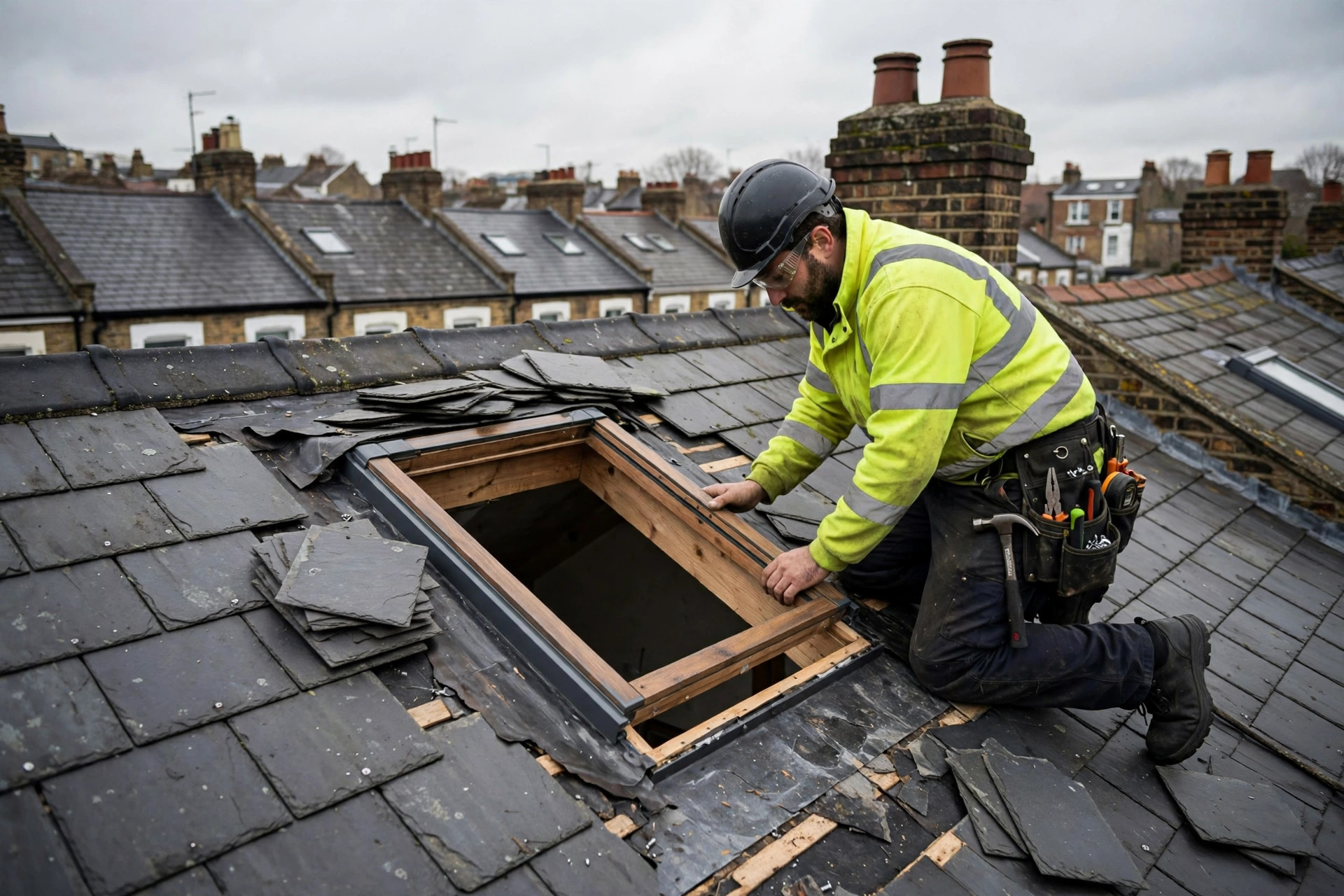
Roof windows bring light and air into lofts and extensions — but after 20-odd years, the seals fail, the flashing perishes and the double glazing mists up. Replacing a Velux is a common job, and the cost depends mostly on the window size and how awkward the access is. Here’s the 2026 picture.
How much does Velux window replacement cost in the UK?
Like-for-like replacement of an existing Velux (new window, new flashing kit, fitted), realistic 2026 prices:
- Small (e.g. 55 x 78 cm / CK02): £600–£950 fitted
- Medium (e.g. 66 x 118 cm / CK04, 78 x 98 cm / MK04): £750–£1,200 fitted
- Large (e.g. 78 x 140 cm / MK08, 114 x 118 cm / PK10): £950–£1,600 fitted
- Top-hung / balcony / large combinations: £1,500–£3,000+ fitted
These are supply-and-fit prices for a standard replacement in an existing opening. London prices sit toward the top. If the opening needs enlarging or the roof structure needs altering to take the window, expect £500–£1,500 on top for the carpentry and making good.
What does the job involve?
A proper like-for-like replacement means:
- Removing the old window and its flashing kit
- Fitting the new window into the existing opening
- Fitting a new flashing kit — this is essential, not optional. The old flashing won’t match the new window properly, and reusing it is the main cause of post-installation leaks
- New insulation collar around the frame (standard on modern Velux installations)
- Making good the internal reveal and any disturbed tiles
Most replacements take half a day to a day. The window itself typically accounts for roughly half the total cost; labour, flashing kit and access make up the rest.
What affects the price?
Window size and type. Bigger windows cost more, and specialist types — top-hung, balcony, smoke-ventilation, or electric/solar-powered — cost considerably more than a standard centre-pivot.
Flashing kit type. The correct flashing kit depends on your roof covering and pitch: tile, slate and plain-tile flashings are all different, and getting the wrong one guarantees a leak. A proper quote names the flashing type.
Access. A Velux on a single-storey extension is easy; one on a steep three-storey roof needs scaffolding or a tower, which can add hundreds to the bill.
Enlarging the opening. Going bigger means cutting rafters, which means structural work — trimming joists, possibly a structural engineer’s input for larger openings. That’s a different job from a simple swap.
Internal finishes. Making good plasterboard reveals, redecorating, and refitting blinds are usually priced separately — check what’s included.
Repair or replace?
Not every faulty Velux needs replacing. Consider repair when:
- The flashing is leaking but the window itself is sound — a skylight repair with a new flashing kit often solves it
- Handles, hinges or vents have failed — spare parts are available for most Velux models
- The glass is misted but the frame is fine — reglazing is possible on many units
Replace when the frame is rotten or warped, the window is 25+ years old with multiple failures, or the glazing has failed and the model is obsolete. One of the most common questions — whether a leaking Velux can be fixed — usually comes down to the flashing: if the installer caulked it instead of using the proper kit, replacement of the flashing is the real fix.
Should you replace skylights during a re-roof?
Yes — almost always. If you’re having the roof replaced, the marginal cost of swapping the Velux units at the same time is far less than coming back later, and the flashings integrate properly with the new roof. Our guide on replacing skylights during a re-roof covers the timing. Old skylights are also a known leak risk on otherwise new roofs, so this is cheap insurance.
Velux vs other brands
Velux is the market leader and the safe choice: parts availability, standardised flashing kits, and every roofer knows how to fit them. Keylite, Fakro and RoofLITE are cheaper alternatives — perfectly serviceable, but check parts availability for the long term. Mixing brands matters for one reason: flashing kits are brand-specific, so a Keylite window needs a Keylite flashing. Don’t let anyone fit a mismatched kit to save £65.
How long do Velux windows last?
20–30 years is typical. The glazing units usually fail before the frame — misting between the panes is the telltale sign. Modern Velux windows with better glazing and insulation collars also perform noticeably better thermally than 1990s units, so replacement can cut draughts as well as leaks. If your windows are approaching that age and you’re planning other roof work, bundling the replacement in is the cheapest way to do it.
Getting a fair quote
Ask for: the exact window model and size, the flashing kit type, whether the insulation collar is included, what access is arranged, what’s included for internal making-good, and the guarantee. If a quote seems cheap, check whether the flashing kit is new — reusing the old flashing is the most common corner cut on this job. See our skylight installation service for what’s included as standard.
Get a free, no-obligation quote
We replace Velux windows and roof skylights across Camden and all of London — usually in a day, with new flashing kits as standard. Request a free quote from our family-run team, trading since 1982, with 338 five-star Google reviews and fully guaranteed workmanship.