Every year, London homeowners lose thousands of pounds to rogue roofers. The pattern is almost always the same: a knock on the door after a storm, a cheap quote, cash upfront — and then a roof that leaks worse than before, or a “roofer” who simply never comes back.
The frustrating part is that most cowboy jobs are avoidable. The warning signs are there before a single tile is lifted. Here are the ten we see most often, and what to do about each one.
The 10 warning signs
1. They knocked on your door uninvited. Legitimate roofing firms in London are busy enough without cold-calling door to door. If someone turns up claiming they “noticed a problem with your roof” while passing, treat it as a red flag, not a favour. Genuine roofers get work through referrals and enquiries, not doorstep pitches.
2. “We were working next door.” This is the classic opener. Sometimes it is true — but cowboys use it because it builds instant false trust. If they really did work next door, ask for the address and knock on that door yourself. A real tradesman will not mind.
3. Cash only, no paperwork. No written quote, no invoice, no receipt, no company name on anything. Cash-in-hand means no paper trail, which means no comeback when the work fails. A proper firm gives you a written quotation with their full business details, VAT status if registered, and terms in plain English.
4. A large payment demanded upfront. A reasonable deposit for materials is normal on bigger jobs. Demanding 50% or more before work starts — or the full amount on day one — is not. This is how the £10,000 losses happen: money paid in advance, job half done or never started. Never pay in full until the work is finished and you have inspected it.
5. No written quote or contract. A verbal figure shouted from a ladder is not a quote. You want a written breakdown: what is being done, what materials are being used, the total price, and what happens if extra work is found. Without that, the price can double halfway through and you will have no defence.
6. No fixed address or landline. A mobile number and a first name is not a business. Check for a real business address, a website, and a landline or consistent contact details. If the only way to reach them is a mobile that goes to voicemail after the job, you already know how this ends.
7. Pressure tactics. “This price is only good today.” “Your roof could collapse tonight.” “We’ve got the scaffold up already, so you need to decide now.” Pressure is how cowboys stop you thinking. Any roofer worth hiring will give you a quote in writing and let you take a few days to compare it with others.
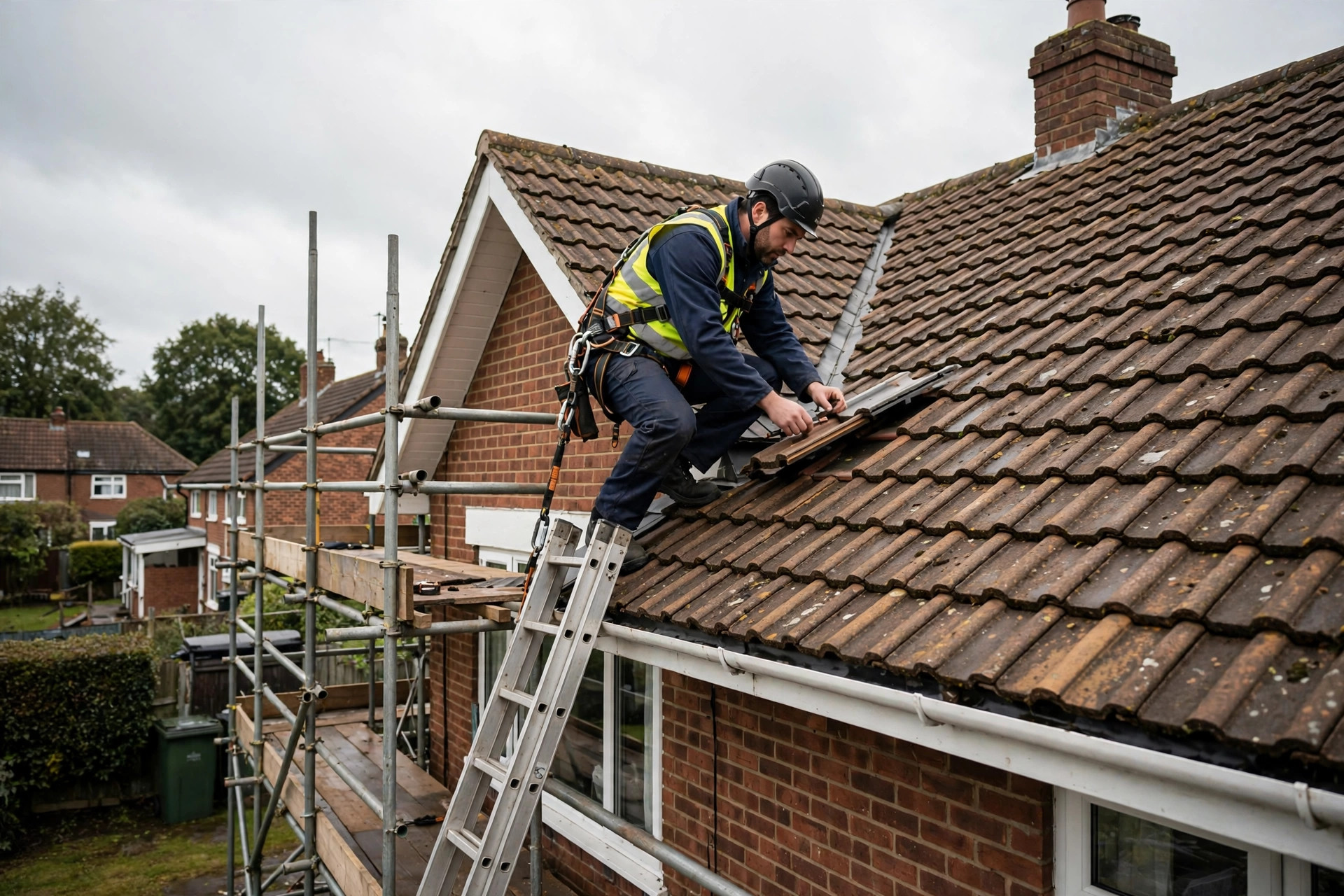
8. No scaffolding or safety equipment. A roofer who wants to work off a ladder for a full re-roof, or sends someone up without harnesses, edge protection, or proper access, is cutting corners on safety — and will cut corners on your roof too. Proper access costs money; cowboys skip it to undercut honest quotes.
9. Suspiciously available, starting tomorrow. Good roofers in London usually have a waiting list of at least a couple of weeks. Someone who can start your full re-roof tomorrow, at half the price of everyone else, is not a bargain — they are either desperate or planning to disappear. Urgency should come from your situation, not theirs.
10. No guarantee in writing. When you ask about a guarantee, watch the reaction. A shrug, a vague “it’s all guaranteed, mate,” or a promise that never makes it onto paper means there is no guarantee. Get it in writing: what is covered, for how long, and who honours it if the company folds.
How to check a roofer is legitimate
Once you have a quote you like, spend twenty minutes verifying the firm. Check their company details and how long they have been trading — a family-run business established for decades has a reputation to protect. Look for public liability insurance and ask to see the certificate. Check genuine reviews across more than one platform, and be wary of a perfect score with only a handful of reviews.
Ask which trade bodies they belong to, such as the NFRC or TrustMark, and verify the membership yourself rather than taking their word for it. Ask for addresses of recent local jobs you can drive past, or photos of completed work. And if you want a full list of what to ask, read our guide to the questions to ask a roofer before you sign anything.
Already hired a cowboy? What to do now
If the warning signs only became clear after work started, stop further payments immediately. Photograph everything — the state of the roof, the materials delivered, any damage caused. Keep copies of every message, quote, and receipt.
Get an independent roofer to inspect and document what is wrong; you will need this if you take the matter further. Report the trader to Trading Standards through Citizens Advice, and if money was taken with no intention of doing the work, report it to Action Fraud. It is also worth checking whether your home insurance covers faulty workmanship, though most policies exclude it.
The safest approach
The cheapest quote is rarely the cheapest job. A fair, written price from an established local firm — with insurance, a real address, and a guarantee you can read — will cost more on the day and far less over the life of the roof. Take your time, compare at least three written quotes, and trust the checks above your gut feeling.
If you want a second opinion on a quote you have received, or a free quote from a roofer you can verify, Victoria Roofing Expert Ltd has been family-run in Camden since 1982. Our frequently asked questions cover deposits, guarantees, and how we work — and if you are still unsure how to choose, our guide on how to find a good roofer walks through the process step by step.