
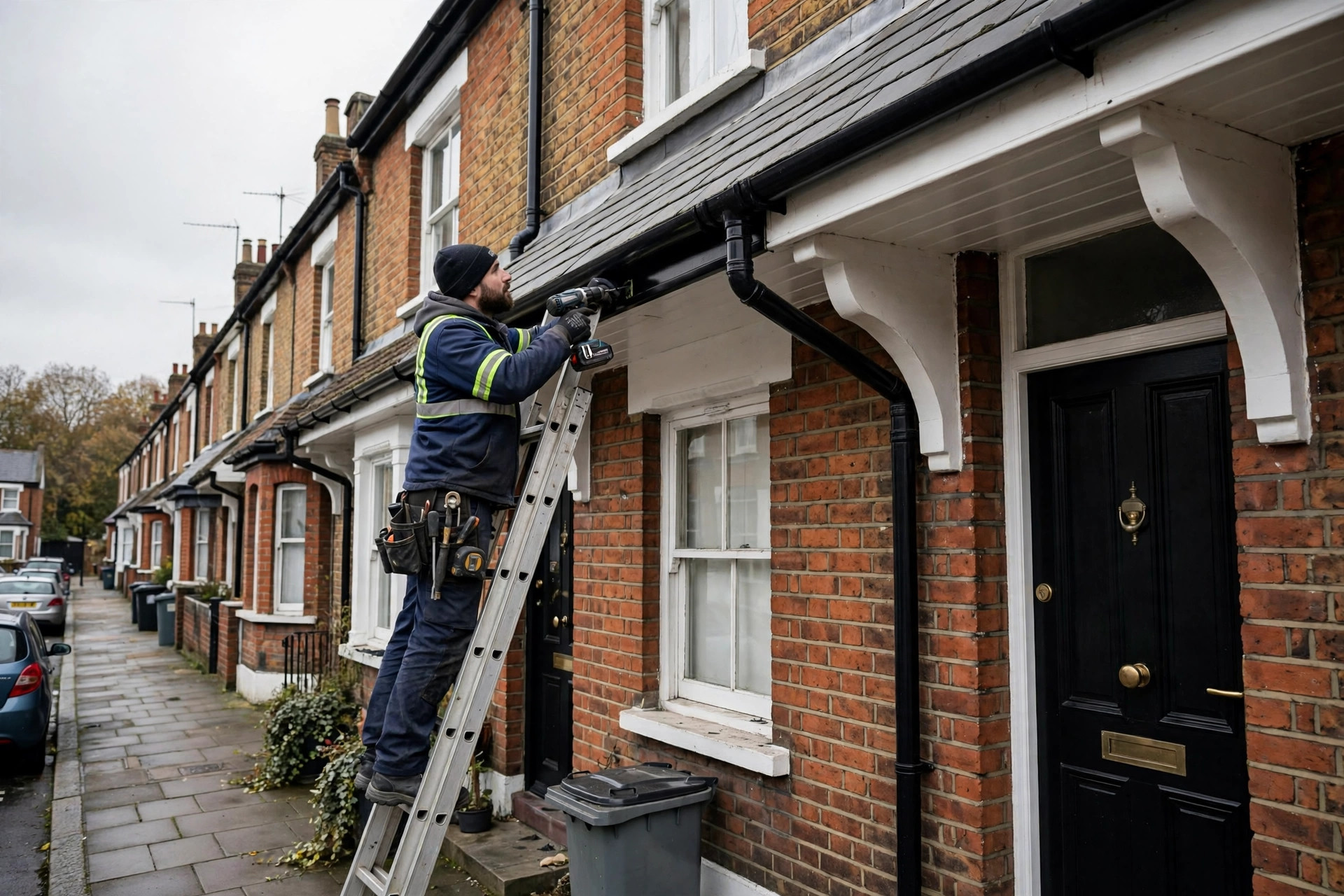
Gutters are the unglamorous workhorses of your house — until they fail. Then it’s water running down the walls, damp brickwork and rotting fascias. Replacing guttering is one of the cheaper roofing jobs, but prices still vary a lot depending on the material and how much access the job needs. Here’s what to expect in 2026.
How much does gutter replacement cost in the UK?
For a typical 3-bedroom house (around 15–25 metres of guttering), realistic 2026 fitted prices are:
- uPVC guttering (supply and fit): £600–£1,200
- Aluminium guttering: £1,000–£2,000
- Cast iron guttering: £1,800–£3,500
- Copper guttering: £2,500–£5,000+
Per metre, fully installed:
- uPVC: £35–£60 per metre
- Aluminium: £55–£90 per metre
- Cast iron: £90–£160 per metre
London prices sit toward the top of these bands. uPVC remains the default for most homes — it’s cheap, lasts 20–25 years, and suits modern and modest properties. Cast iron is the choice for period properties and conservation areas, where it also lasts 50+ years when maintained.
Signs your gutters need replacing
Look for: gutters pulling away from the fascia or visibly sagging between brackets, joints that drip every time it rains, cracks or splits in the plastic, paint peeling off cast iron with rust underneath, and water pouring over the front edge during heavy rain (a sign they’re blocked, undersized, or hung without enough fall). Also check the ground below — green algae streaks on the wall under the gutter line, or damp brickwork at the eaves, tell you water has been misbehaving for a while. A single leaking joint is a repair job; sagging along the whole run with multiple failures is a replacement job.
What’s included in a proper gutter replacement?
Not just the gutters. A proper job includes:
- Removal and disposal of the old gutters and brackets
- New gutters, downpipes, brackets, unions, corners and outlets
- Correct falls so water actually runs to the downpipes
- Sealing all joints properly — most leaks come from failed joints, not failed gutters
- Checking and clearing the downpipe shoes and gullies at ground level
If your fascias are rotten, new gutters have nothing solid to fix to — which is why gutter replacement is often done together with fascia and soffit replacement. Sorting both at once saves paying for access twice.
uPVC vs aluminium vs cast iron
uPVC is the budget workhorse: cheap, lightweight, easy to fit, and available in black, white and brown. It can look plasticky on period homes, and it goes brittle after a couple of decades in the sun.
Aluminium is the middle ground: slimmer profiles than uPVC, available in any RAL colour, doesn’t rust, and lasts 30–40 years. It’s the sensible upgrade if you want better looks without cast-iron prices. See our comparison of cast iron vs uPVC guttering for the full detail.
Cast iron is the heritage option: heavy, traditional, and the only acceptable choice in many conservation areas. It’s the most expensive to buy and fit, and it needs painting every 5–8 years, but nothing else looks or lasts like it.
What affects the price?
Access. Ground-floor and single-storey guttering can often be done from ladders; a three-storey terrace needs a tower or scaffold. This is frequently the biggest line on the quote.
Length and complexity. More metres, more corners, more downpipes — more cost. Dormers, extensions and awkward angles add joints and labour.
Condition of fascias. Rotten fascias or failed eaves felt mean the gutter has nothing to hang off. Fixing the eaves detail adds cost, but skipping it guarantees the new gutters will fail.
Downpipes. Quotes sometimes cover gutters only. Confirm whether downpipes are included — replacing them at the same time usually adds £300–£600.
Repair or replace?
Guttering can often be repaired rather than replaced. A gutter repair makes sense when: one joint is leaking, a bracket has broken, or a single section is damaged. Full replacement is the right call when the gutters are sagging along their whole length, joints are failing in several places, the plastic is brittle and cracking, or they’re simply the wrong size for the roof (undersized gutters overflowing in heavy rain won’t be fixed by a repair).
If water is running behind the gutter rather than through it, the problem is usually the eaves detail or the fascia, not the gutter itself — worth diagnosing before you pay for new gutters.
How long should new gutters last?
Roughly: uPVC 20–25 years, aluminium 30–40 years, cast iron 50+ years with repainting, copper 60+ years. Lifespan depends on installation — gutters hung without proper falls or with weak brackets fail early regardless of material. Keep them clear of leaves and moss, and check joints every autumn.
Getting a fair quote
Ask for the quote in writing with: the material and profile, total metres, whether downpipes are included, what access is provided, and the guarantee. Two quotes for the same job can differ by hundreds purely on access arrangements, so make sure you’re comparing like with like. Our guttering services page covers everything we do on gutters, fascias and downpipes.
Get a free, no-obligation quote
We replace gutters across Camden and all of London — usually in a day, and often alongside fascia and soffit work so you only pay for access once. Request a free quote from our family-run team, trading since 1982 with 338 five-star Google reviews and fully guaranteed workmanship.