
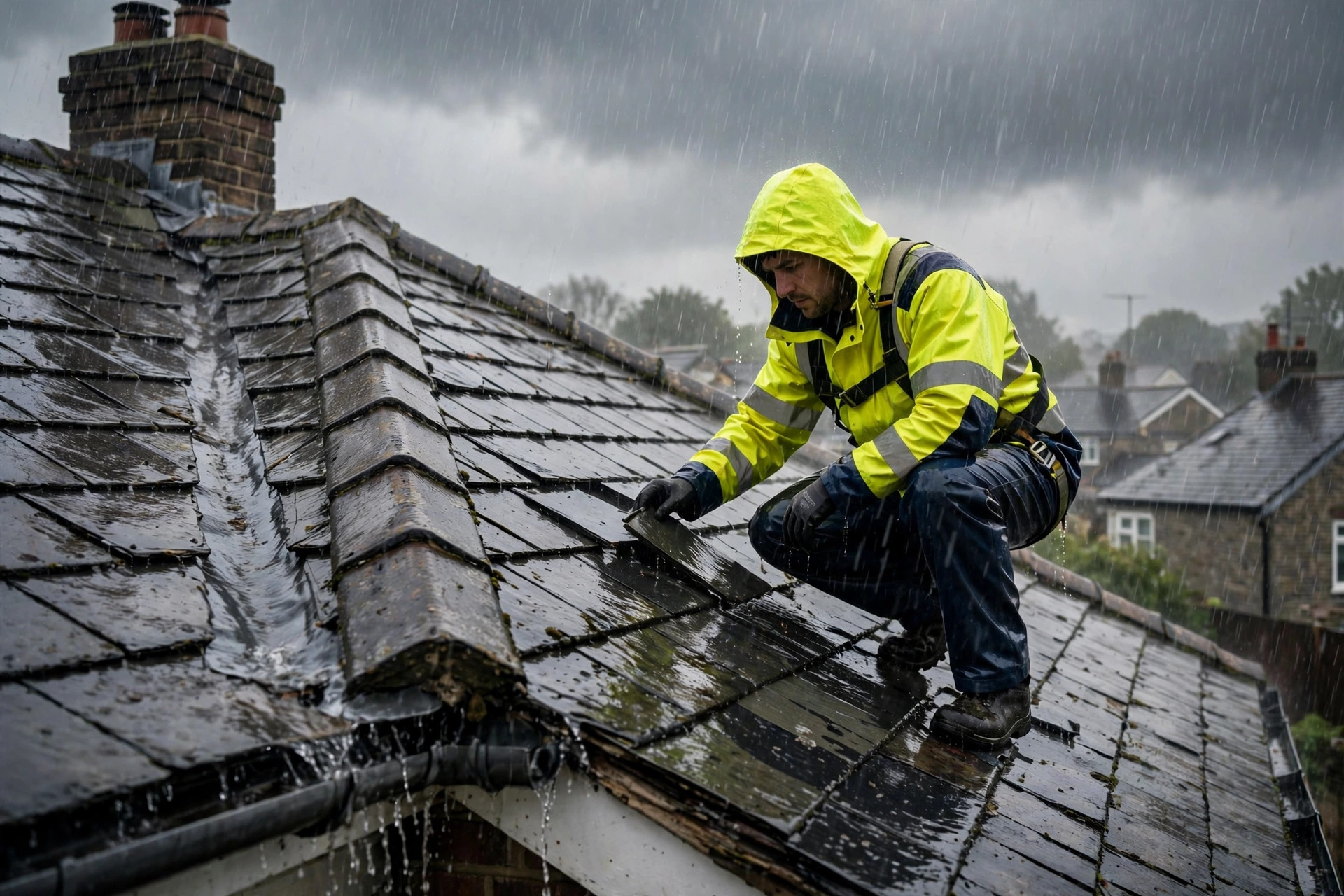
It is raining hard, water is coming in, and you need to act. When a roof starts leaking during heavy rain, the first hour matters more than you think — quick, calm action inside the house can save you thousands in damage while you wait for a roofer.
Here is exactly what to do, in order.
Step 1: Contain the water inside
Your first job is damage control, not roof repair. Move furniture, electronics, rugs, and anything valuable away from the leak. Put buckets, washing-up bowls, or large saucepans under the drip — and put an old towel in the bottom of each container to stop the splashing, which can damage floors and walls just as badly as the drip itself.
If water is spreading across a floor, lay down towels to soak it up and stop it reaching skirting boards and neighbouring rooms. If it is coming through a light fitting, turn off the electricity to that circuit at the consumer unit immediately and do not turn it back on until an electrician has checked it. Water and electrics are a genuinely dangerous combination.
Step 2: Deal with a bulging ceiling
If the ceiling is bulging or sagging where water is collecting above it, that water has to go somewhere — and you would rather it goes into a bucket than across the whole ceiling. Place a large container underneath, then carefully pierce the lowest point of the bulge with a screwdriver to let the water drain in a controlled stream.
This feels drastic, but it is standard advice: a small, controlled hole is far cheaper to repair than a collapsed ceiling. Widen the hole slightly if the flow is slow, and be ready — the first release can be sudden.
Step 3: Get into the loft (safely)
If you can safely access the loft, take a torch and look for where the water is getting in. You are not trying to fix it — you are trying to understand it. Look for drips running down rafters, wet patches on the felt or membrane, and daylight showing through where it should not.
If you can see the entry point and reach it safely, you can sometimes slow the leak by placing a bucket in the loft itself to catch water before it reaches the ceiling below. Lay a sheet of plastic or a tarp over insulation and stored items. Do not step on the plasterboard ceiling — only on the joists — and do not go up during an active storm if the loft feels unsafe.
Step 4: Do NOT go on the roof
This needs saying plainly: do not climb onto your roof in heavy rain. Wet tiles and slates are treacherously slippery, wind gusts are unpredictable, and a fall from roof height can be fatal. No leak is worth that risk. Temporary fixes can wait until the rain eases and a professional with proper access equipment arrives. If you want to know what safe temporary measures look like, read our guide to storm-damaged roof temporary fixes — but note every one of them starts with safe conditions.
Step 5: Call an emergency roofer
Once the inside is under control, call a roofer. If it is out of hours, you need a firm that genuinely offers a 24-hour service — ours is open 24 hours, and our guide to finding an emergency roofer in London at night explains what to expect when you call.
When you call, have this information ready: where the water is coming in, how bad it is, what type of roof you have (pitched or flat), and whether there is safe access. Photos of the leak inside and any visible damage outside help enormously. A good emergency roofer will talk you through immediate steps on the phone and arrange to attend — often making the roof watertight first and scheduling the permanent roof repair in London once the weather allows.
Step 6: Document everything for insurance
While you wait, photograph and video the leak, the damage, and the steps you have taken. Insurers want to see that you acted promptly to limit damage — it strengthens any claim. Keep receipts for buckets, tarps, or any emergency materials you buy. If the leak was caused by storm damage, note the date and time of the storm; weather records can support your claim.
Check your home insurance policy: most cover sudden storm damage to the roof, but not wear and tear or gradual deterioration. Knowing which one you are dealing with matters, and a roofer’s assessment after the event will help.
After the rain stops
Once the weather clears, the leak needs a proper diagnosis — not just a patch over the symptom. Water often travels along timbers and felt before it appears inside, so the entry point can be metres from the stain on your ceiling. A professional inspection finds the real source, whether that is a slipped tile, failed flashing, a cracked valley, or perished felt.
If water is coming through the ceiling itself rather than just staining it, our guide on water coming through your ceiling covers the other possible causes — because not every ceiling leak is a roof leak.
A roof leak in heavy rain is stressful, but it is manageable: contain the water, protect the electrics, stay off the roof, and call a professional. Victoria Roofing Expert Ltd is open 24 hours across Camden and all of London — call 07848 256099 for emergency help, or request a free quote for the permanent repair once the storm has passed.