

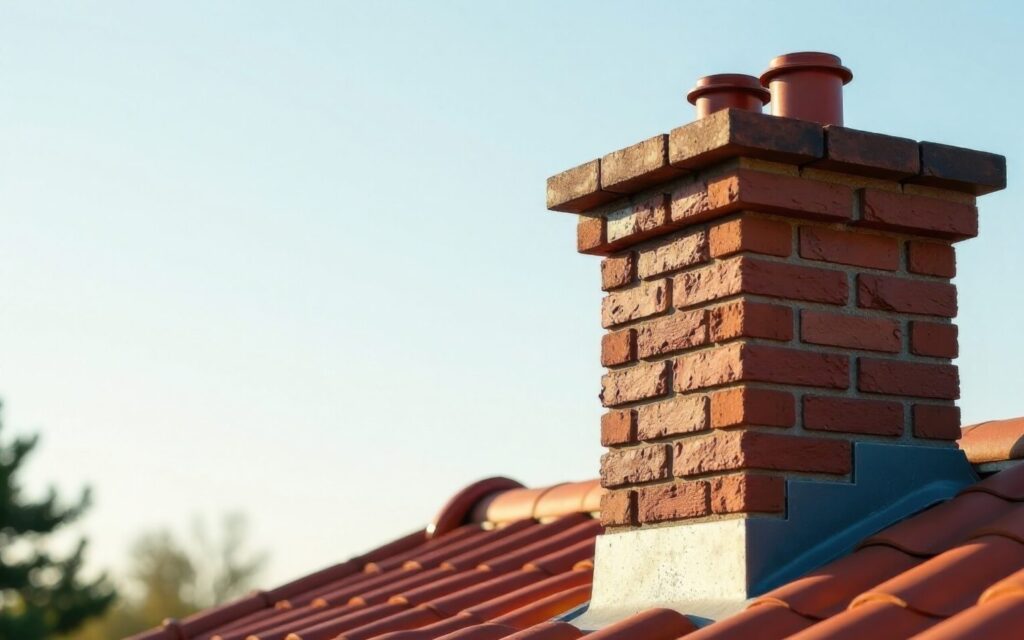
A crumbling chimney stack rarely announces itself with a bang. It’s a few loose bits of mortar in the guttering, a damp patch creeping down the chimney breast in the spare room, or a pot that’s started leaning at an angle it definitely wasn’t built at. And that’s usually the point homeowners start typing “chimney repair cost UK” into Google at eleven at night, trying to work out whether they’re looking at a £200 fix or a £4,000 rebuild.
The honest answer is: it depends entirely on what’s actually gone wrong up there, and you can’t tell from the ground.
This guide breaks down what UK chimney repairs actually cost in 2026, what pushes the price up, and where London and South East properties in particular tend to run into extra cost and extra red tape.
What Chimney Repairs Typically Cost in 2026
Chimney repair cost UK figures vary hugely because “chimney repair” covers a dozen genuinely different jobs, from a quick repoint to a full above-roof rebuild. Anyone who’s compared roofing quotes has seen this pattern — the range on paper looks enormous until you understand which job you’re actually being quoted for.
Based on current UK trade pricing across multiple 2026 cost guides, here’s roughly where the numbers sit:
| Repair type | Typical cost range |
|---|---|
| Minor repointing (small area, easy access) | £150 – £500 |
| Full repointing of the stack | £400 – £1,300 |
| Lime mortar repointing (period/listed property) | £700 – £1,200+ |
| Flaunching (crown) renewal | £150 – £500 |
| Lead flashing replacement | £400 – £950 |
| Chimney pot replacement | £100 – £300 |
| Full stack rebuild above the roofline | £1,000 – £3,500+ |
| Chimney removal (per floor, with structural support) | £900 – £6,800+ |
| Scaffolding (where required) | £400 – £1,200 |
These figures are regional estimates and will vary by property access, roof pitch, chimney height, and material specification — a two-storey terrace with no side access will always cost more to scaffold than a detached bungalow with a driveway. Roofers who deal with this daily know that scaffolding, not brickwork, is often the single biggest line item on a small repair job, sometimes exceeding the actual repair cost itself.
London and South East pricing typically runs higher than the national average, largely down to labour rates, congestion charging on scaffold deliveries, and tighter access on terraced streets.
Why Chimney Repair Cost UK Prices Vary So Much
Three things drive chimney repair cost UK figures more than anything else: access, the extent of the damage, and whether the property has conservation constraints.
Access is the big one. A chimney on a detached house with clear ground access might only need a tower scaffold or even a cherry picker for a day’s work. A shared chimney stack between two Victorian terraces, hemmed in by neighbouring roofs and a narrow side return, often needs a full scaffold erected and shared or negotiated with next door — which adds both cost and time.
Extent of damage matters just as much. Anyone who’s managed a re-roof on an occupied property understands the difference between fixing what you can see and fixing what’s actually failed. A stack that looks fine from the pavement can have spalling brickwork, a cracked flaunching, and perished flashing all happening at once, and a proper survey usually finds more than the homeowner expected.
Conservation status is the factor most homeowners don’t budget for. Under the Planning Portal’s guidance, fitting, altering or replacing an external flue or chimney is normally considered permitted development, not requiring planning consent, provided certain conditions are met but that changes fast in a conservation area. Because conservation area status protects the appearance of an area, permission will often be required for external works, and local planning authorities can remove additional permitted development rights through an Article 4 direction where they believe it necessary to protect heritage assets. Large parts of inner and outer London sit inside conservation areas, so it’s always worth a quick check with the local planning authority before assuming a repair or rebuild is automatically permitted.
Repointing: The Most Common Chimney Job
Repointing is the job most UK chimneys need at some point, and it’s usually the first sign that a stack needs attention. Mortar joints are the weakest part of any masonry chimney — they’re softer than the brick or stone around them by design, so they wear first and protect the structure behind them.
Contractors who’ve fitted repointing across period and modern stacks know the material choice matters as much as the labour. Cement-based mortar is cheaper and faster to apply, but on pre-1919 properties it’s often the wrong call — it’s harder and less breathable than the original lime mortar, which traps moisture inside the brickwork rather than letting it evaporate out. That trapped moisture is what causes frost damage and spalling brick faces over a few winters.
Lime mortar repointing costs more, generally £700 to £1,200 or higher depending on stack size, because the material itself costs more and it needs longer to cure properly between coats. On a Victorian or Edwardian terrace — the dominant housing stock across much of London and the Home Counties — lime mortar is usually the correct specification, not just the traditional one.
Flashing and Leadwork: Where Most Leaks Actually Start
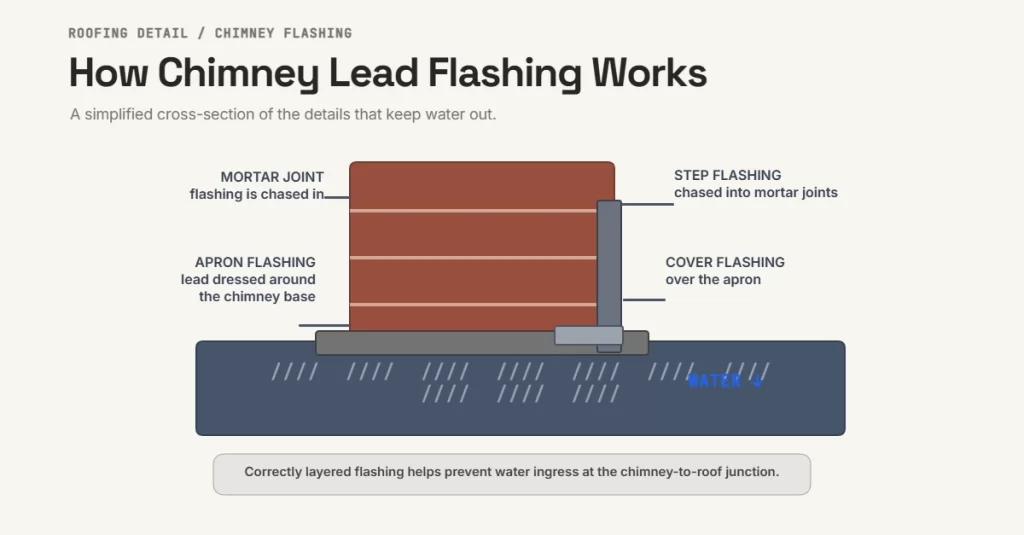
If a chimney is leaking, the fault is more often in the flashing than the brickwork itself. The junction between a chimney stack and the roof slope is one of the hardest details on any pitched roof to get watertight, because it’s where two different materials — masonry and tiles or slates — have to move independently without letting water through the gap.
Anyone who’s chased a persistent damp patch back to its source knows it usually traces back to failed lead flashing rather than a cracked chimney pot. Lead is the industry standard here because it’s flexible enough to dress tightly around brickwork and durable enough to last decades if installed correctly. Current UK leadwork guidance from the Lead Sheet Association identifies Code 4 lead as the standard specification for most domestic chimney step flashings and cover flashings, with Code 5 sometimes used for wider back gutters on larger or more exposed stacks.
Chimney flashing replacement typically costs £400 to £950, and it’s not a job where cutting corners pays off. Step flashing needs to be chased into the mortar joints and dressed properly, not surface-sealed with mastic. Sealant-only “repairs” over old flashing are a common bodge — they might buy a season or two, but they fail fast and often mask a bigger problem developing underneath.
Rebuilds and Removal: The Bigger-Ticket Jobs
When a stack has moved out of true, when spalling brick has gone beyond repointing, or when the flaunching has failed completely and water has been getting into the flue lining for years, repointing stops being enough. At that point, a full above-roof rebuild is usually the more honest recommendation, even though it costs considerably more than a repair.
A full chimney stack rebuild above the roofline generally runs £1,000 to £3,500 or more, depending on height, number of pots, and whether the original bricks can be reused or need matching replacements sourced. On period properties, matching London stock brick or reclaimed materials adds cost but protects the character of the building — and in a conservation area, it’s often not optional.
Chimney removal is the other end of the spectrum, and it’s a bigger structural decision than most homeowners expect. Removing a stack above the roofline is one thing; removing the chimney breast internally is another matter entirely, because it often forms part of the structural support for the floors above. Full removal with proper structural support in place can run from £900 up to £6,800 or more per floor once Building Control involvement is factored in.
What the Data Shows
Verified national cost benchmarking specific to chimney repair remains limited, so the clearest signal comes from what roofing and leadwork trade bodies are reporting rather than a single headline statistic. Demand for chimney repointing and flashing work has stayed consistently strong through 2025 and into 2026, tracking the wider pattern of ageing pitched-roof housing stock across the UK needing roofline maintenance. Roofing contractors report seeing more flashing failures flagged during routine inspections following recent storm seasons, which lines up with what any team working roofs regularly would expect — wind-driven rain finds weak flashing details faster than it finds weak brickwork.
DIY vs Professional: Where the Line Actually Sits
Chimney work sits high on a roof, often above two storeys, and it involves both structural masonry and specialist leadwork — not a combination that suits DIY beyond the most basic visual inspection from the ground with binoculars. The Health and Safety Executive’s Work at Height Regulations exist for a reason, and chimney stacks are exactly the kind of job where a fall risk assessment and proper edge protection genuinely matter, not just as box-ticking.
Property owners who’ve been through a storm damage claim know insurers expect evidence the property was reasonably maintained, and a bodged DIY repair or an uninsured tradesperson’s work can complicate a claim later. For anything beyond clearing debris from a ground-level flue or checking a cowl is still in place, this is professional-only territory.
Landlords and Property Managers: A Different Set of Pressures
Landlords face a slightly different calculation than owner-occupiers. A chimney repair on a let property isn’t just a cost decision — it’s a safety and compliance one, particularly where the chimney serves an active open fire or wood burner, since flue integrity is directly tied to carbon monoxide risk. Scheduling matters too: chimney repair work above an occupied flat or house in multiple occupation usually needs coordinated access and, on shared or party-wall stacks in terraced housing, agreement from the neighbouring owner before scaffold can go up.

FAQ
How much does chimney repair cost in the UK in 2026?
Chimney repair cost UK figures typically range from £150 for a minor repointing job to £3,500 or more for a full stack rebuild, with lead flashing replacement usually falling between £400 and £950. Scaffolding, access, and whether the property sits in a conservation area all affect the final price.
Do I need planning permission to repair or rebuild a chimney?
Most straightforward repairs don’t need permission. Altering, replacing, or rebuilding a chimney is normally treated as permitted development, but conservation areas, listed buildings, and properties with an Article 4 direction often require permission for the same work, so it’s worth checking with the local planning authority first.
How do I know if I need repointing or a full rebuild?
If the mortar is crumbling but the bricks themselves are sound and the stack is still standing straight, repointing is usually enough. If bricks are spalling, the stack has visibly leaned, or the flaunching has failed and water has been tracking into the flue for a while, a rebuild is the more honest fix.
Why is my chimney leaking if the brickwork looks fine?
The most common cause is failed lead flashing at the roof junction rather than the masonry itself. Flashing has a shorter practical service life than brick or lead-lined flue work, and it’s the detail most likely to fail first after storms.
Does home insurance cover chimney repair?
It depends on the cause. Storm and impact damage is often covered, while wear-and-tear deterioration usually isn’t. Insurers generally expect evidence the chimney was reasonably maintained, so keeping records of past inspections and repairs is worth doing.
In Summary
Chimney repair cost UK figures span such a wide range because the term covers everything from a £150 spot repoint to a £6,800 structural removal, and the only reliable way to know which end of that range applies is a proper inspection rather than a guess from the pavement. Getting the diagnosis right — repointing versus rebuild, sealant versus proper lead flashing — is what separates a repair that lasts fifteen years from one that needs redoing in three.
Written by the team at Victoria Construction, roofing specialists serving London, Hertfordshire, Surrey, Buckinghamshire, and Berkshire. Learn more at victoriaconstruction.co.uk.