
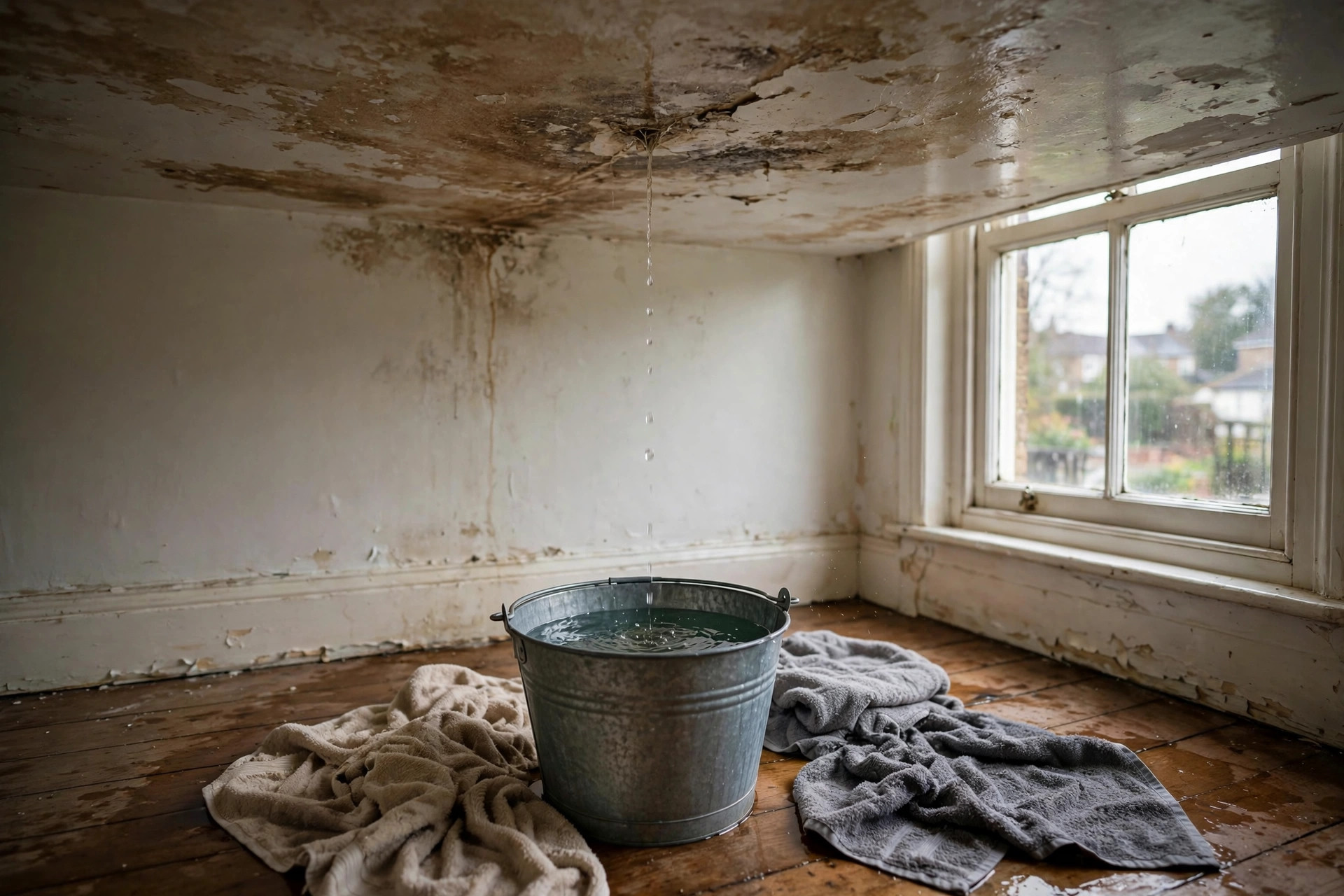
Water dripping — or pouring — through your ceiling is every homeowner’s nightmare, and the first question is always the same: where is it coming from? The answer is not always the roof. Before you call anyone, it helps to know the likely causes, because the right tradesperson depends on the source.
Here are the common causes, what to do right now, and how to tell a roofing problem from a plumbing one.
The likely causes
A roof leak. The most common cause, especially during or after heavy rain. Water enters through slipped tiles, failed flashing, a cracked valley, or perished felt, then travels along timbers before appearing — often metres from the actual entry point. If the leak appears or worsens when it rains, the roof is the prime suspect. Our guide on what to do if your roof is leaking walks through the immediate steps.
A leaking or burst pipe. If the water appears regardless of the weather — or suddenly, in a large volume — suspect plumbing. Pipes running through lofts and ceiling voids can split in freezing weather, and joints can fail at any time. A burst pipe tends to produce a lot of water very quickly, and it will not stop on its own. This is a plumber’s job, urgently.
An overflowing or leaking tank. Cold water storage tanks and central heating header tanks live in lofts. A stuck ball valve can overflow a tank for hours unnoticed, with water finding its way through the ceiling below. Check the loft: if the tank is overflowing, tie up the ball valve or turn off the mains stopcock as a temporary measure.
Bathroom leaks from above. A failed shower seal, a leaking bath waste, or a dripping tap in the bathroom above can soak through floorboards and appear as a ceiling stain or drip below. These usually show as slow, persistent damp patches rather than sudden floods, and they often come and go with bathroom use.
Blocked gutters and eaves issues. Water overflowing blocked gutters can track back under the eaves and into the roof space, eventually appearing through the ceiling near exterior walls. If the damp is worst near the edges of the room after heavy rain, check the gutters before assuming the worst.
Condensation. In cold weather, poor loft ventilation can cause heavy condensation that drips from cold surfaces and mimics a leak. It typically shows as general dampness and droplets rather than a single active drip, and it is worst on cold mornings. Persistent condensation needs a ventilation fix, not a roofer’s patch.
Emergency steps: what to do right now
Whatever the cause, the immediate drill is the same:
- Contain the water. Buckets under the drip, towels around them to catch splashes, valuables and furniture moved clear.
- Protect the electrics. If water is near a light fitting or switch, turn off that circuit at the consumer unit and keep it off until checked.
- Drain a bulging ceiling. If the ceiling is sagging with trapped water, pierce the lowest point over a large container — a controlled release beats a collapse.
- Find the stopcock. If you suspect plumbing, turn off the mains water. Knowing where your stopcock is before an emergency is one of the most useful things a homeowner can do.
- Get into the loft if safe. A torch and a careful look (joists only, never the plasterboard) will often reveal the source: a visibly burst pipe, an overflowing tank, or water tracking down from the roof slope.
Do not go onto the roof, especially in bad weather or darkness. And do not ignore it until morning if water is actively coming through — an hour of dripping can be the difference between a dried-out patch and a ruined ceiling.
Roofer or plumber? How to decide
This is the key decision, and getting it wrong wastes time and callout fees:
- It rains, it leaks; it stops, it stops → roofer. The correlation with weather points to the building envelope.
- Constant flow regardless of weather, or a sudden flood → plumber. Pressurised water does not wait for rain.
- Damp patch below a bathroom, worse after showers → plumber (or bathroom fitter).
- Water near exterior walls after heavy rain, gutters overflowing → could be either; check gutters first, then call a roofer if they are clear.
- General loft dampness, droplets on cold mornings, no single drip point → ventilation issue; a roofer can advise, but it is not an emergency repair.
If you are unsure, a roofer’s inspection will quickly rule the roof in or out — and an honest one will tell you when the problem is plumbing, not roofing. That honesty is exactly what our 15 questions to ask a roofer help you find.
After the emergency
Once the water is stopped and the immediate damage contained, the ceiling itself needs attention. Small stains can often be sealed with stain-blocking paint once fully dry — which can take weeks, so do not rush it. Sagging or crumbling plasterboard needs cutting out and replacing. And whatever caused it needs a proper permanent fix, not just a patch: the roof repair for a leak, a plumber’s repair for pipework, or a ventilation solution for condensation.
Document everything with photos for your insurer as you go. Most buildings policies cover sudden events — burst pipes, storm damage — but not gradual deterioration, so the cause matters for any claim.
When it is a roofing emergency
If the evidence points to the roof — rain-driven, coming through the top of the house, possibly after a storm — do not wait. Victoria Roofing Expert Ltd is open 24 hours across Camden and all of London: 07848 256099. Our guide to finding an emergency roofer in London at night explains exactly what happens when you call. For non-urgent assessment, request a free quote and we will inspect properly and quote in writing.