Moss on roof tiles is one of those things that creeps up on you. One year there’s a bit of green in the shaded corner; a few years later the whole north-facing slope looks like a lawn. Beyond the look of it, heavy moss does real harm: it holds moisture against the tiles, lifts tile edges, blocks gutters with debris, and in winter the freeze-thaw cycle can crack tiles. Here’s how to deal with it safely — and the one method to avoid.
Why moss grows on roofs
Moss loves damp, shaded, undisturbed surfaces. North-facing slopes, roofs under overhanging trees, and porous older tiles (weathered concrete tiles are the worst) are prime territory. London’s damp climate doesn’t help. Once established, moss forms a spongy mat that stays wet long after rain stops, keeping the tiles permanently damp underneath.
A light dusting of moss is mostly cosmetic. Thick, established growth is a maintenance issue: it retains water against the tile surface, its root-like structures work into tiny cracks, and chunks of it break off and wash into your gutters, blocking them. That’s why moss removal and gutter cleaning so often go together.
Why you should NOT pressure wash your roof
This is the most important part of this article. Pressure washing is the fastest way to “clean” a roof — and one of the fastest ways to damage it.
A pressure washer strips the protective granular surface off concrete tiles and the weathered face off clay tiles and slates. It drives water up under the tiles and past the laps, soaking the battens and underlayment. On older roofs it can crack tiles outright, and it blasts the mortar out of ridges and verges. We’ve been called to roofs that were leaking for the first time in decades — the week after a pressure-wash “clean.”
Some companies offer “soft washing” (low-pressure chemical treatment), which is less destructive, but the safest approach for most UK roofs is manual removal. If a company quotes for pressure washing your roof, find another company.
Safe method 1: Manual brushing and scraping
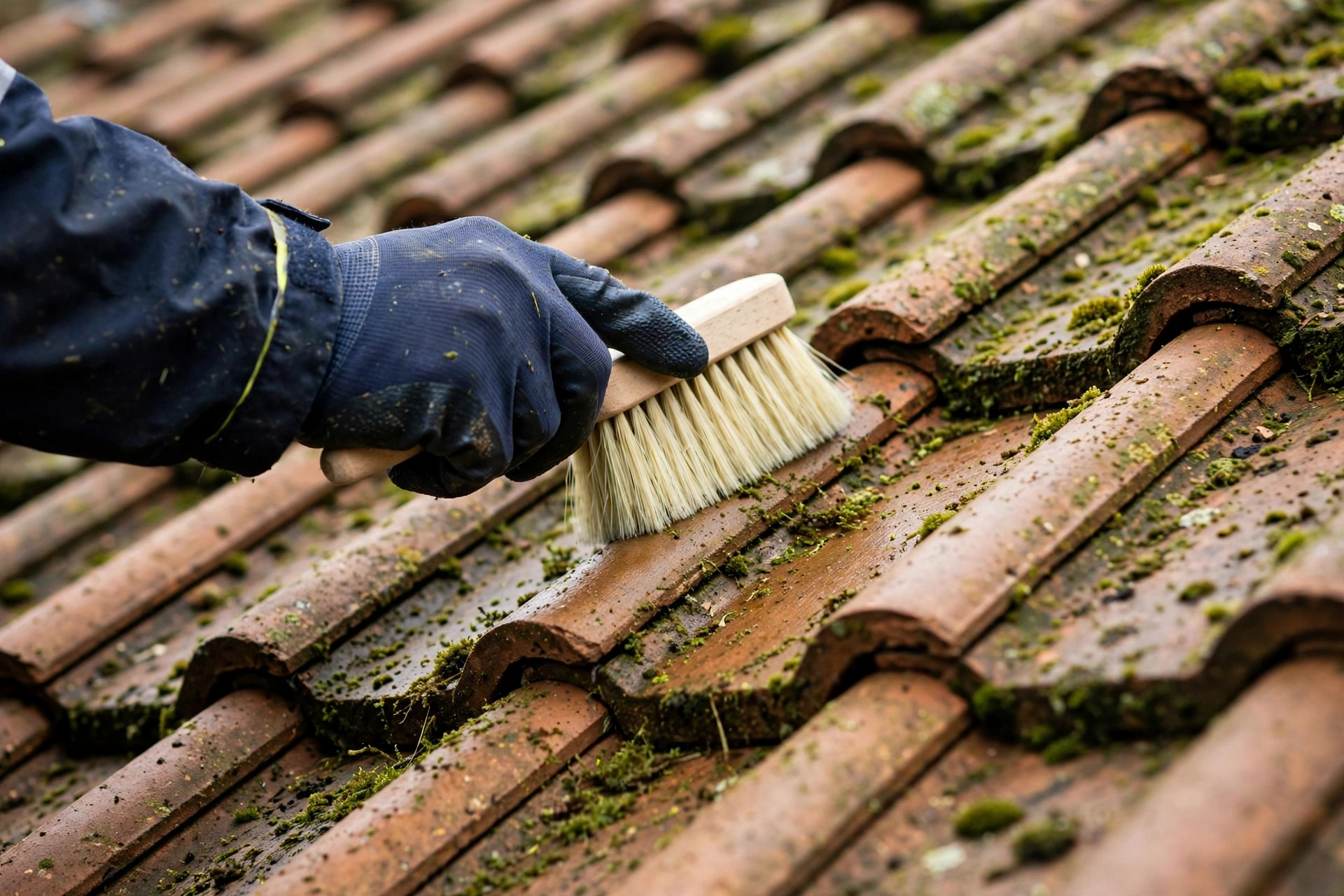
The gold standard for moss removal is simple: a stiff brush or purpose-made roof scraper, worked carefully down the slope, tile by tile. The moss is dislodged and collected rather than blasted around.
Key points for doing it safely:
- Work from a proper platform (scaffold or cherry picker) — not balanced on the tiles, which crack underfoot
- Brush down the slope, never up under the tile laps
- Use a stiff-bristled brush, not a wire brush that scores the tile surface
- Collect the debris and clear the gutters afterwards — dislodged moss will block them solid
This is labour-intensive, which is why professional moss removal costs what it does — but it doesn’t damage the roof. Typical professional cost in London: £300–£800 for a standard 3-bed house, depending on how bad the growth is and the access needed.
Safe method 2: Biocide treatment
After manual removal (or for light growth), a moss-killing biocide treatment prevents regrowth. These are applied by sprayer on a dry day and left to work — the remaining moss dies off and weathers away over weeks. Professional-grade treatments keep roofs clear for 2–4 years.
Copper strips fitted at the ridge are an old-school preventative: rainwater picks up copper ions as it runs down, inhibiting moss growth below. They work modestly well on small roofs but won’t clear established moss.
What about DIY chemical treatments? Household bleach and similar products are sometimes suggested online, but they’re corrosive to metal gutters, flashings, and fixings, and the runoff kills garden plants. If you’re going the chemical route, use a product made for roofs and follow the dilution instructions exactly.
Safe method 3: Prevention
Once the roof is clear, keep it that way:
- Trim overhanging branches. Shade and leaf litter are moss’s best friends. Cutting back trees that overhang the roof makes a bigger difference than any treatment.
- Keep gutters clear. Blocked gutters keep the eaves damp, encouraging moss at the bottom of the slope. See how often to clean gutters in the UK.
- Fix drainage issues. If one area of roof stays wet because of a design issue (a valley that ponds, tiles that don’t shed properly), moss will keep coming back there. Sometimes the real fix is a roof repair, not another clean.
When moss signals a bigger problem
Heavy moss in one specific area can be a symptom rather than the disease. A persistently damp patch of roof might mean a slipped tile above letting water in, a failed valley, or perished underlayment keeping the area wet. If moss keeps returning to the same spot after cleaning, get the roof inspected — there’s usually a reason.
Similarly, if the tiles themselves are crumbling or the surface is heavily eroded beneath the moss, cleaning won’t save them. At that point the honest conversation is about roof repair vs replacement.
Should you do it yourself?
For a bungalow or single-storey extension with safe access, careful DIY brushing is feasible. For anything higher, the safety equipment (tower scaffold or proper roof ladders) costs more than hiring the job out — and walking on tiles you don’t know how to walk on breaks them. Falls from roofs are one of the most common fatal DIY accidents in the UK. Be honest about the height involved.
Get it done properly
Victoria Roofing Expert Ltd is a family-run roofing contractor at 188 Camden High St, London NW1 8QP, serving Camden and all of London since 1982. We clear moss by hand — no pressure washers — treat to prevent regrowth, clear your gutters at the same time, and inspect the roof while we’re up there. Fully guaranteed workmanship, 5.0 from 338 Google reviews. See our guttering services for related work.
Call 07848 256099 — open 24 hours — or request a free quote via our contact page.