
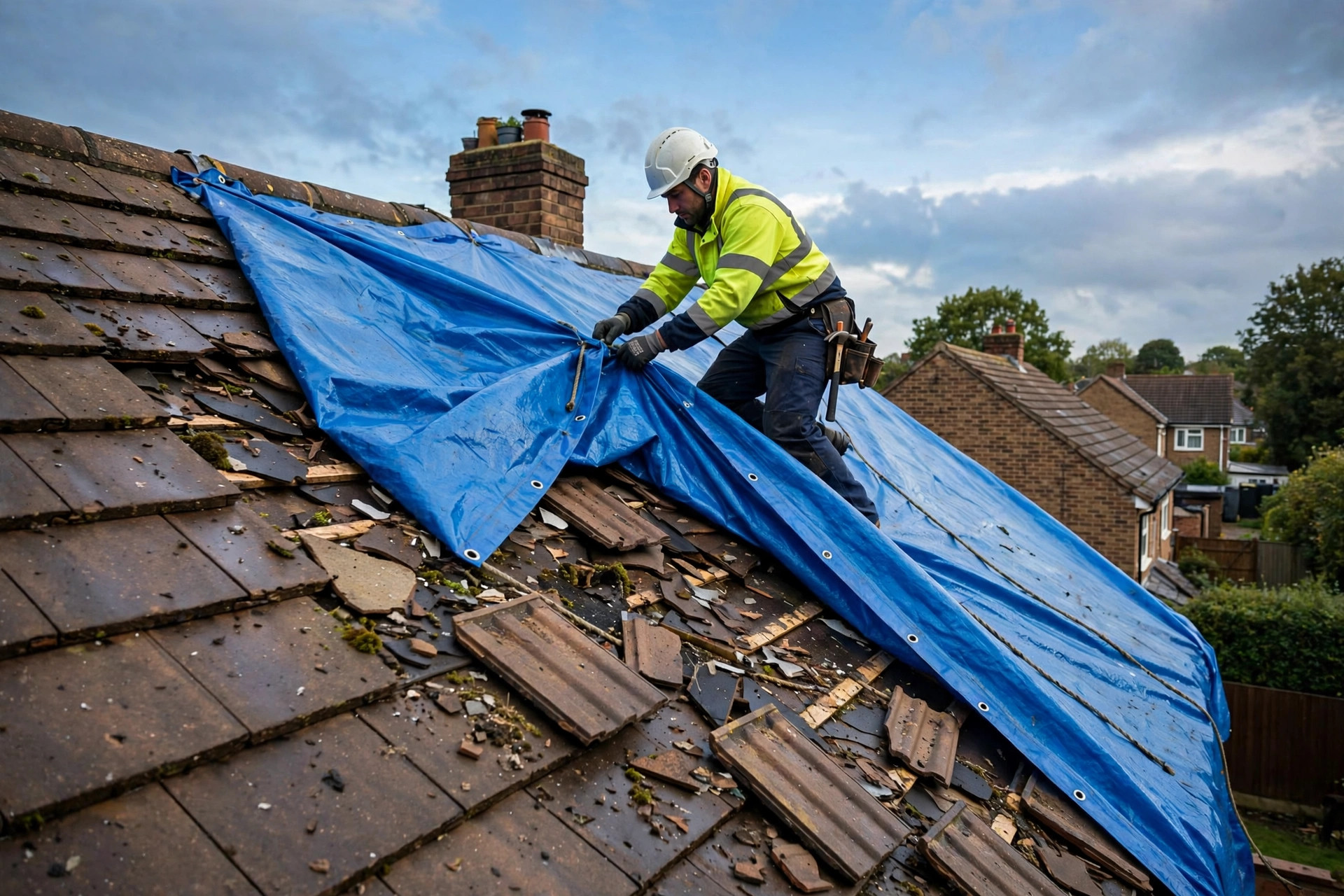
The storm has passed, your roofer is booked — but they cannot get to you until tomorrow, and the forecast says more rain tonight. What can you safely do in the meantime to limit the damage?
The short answer: quite a lot, as long as every measure starts with safety. Here are the temporary fixes worth doing, and the ones to leave alone.
First: assess from the ground, not the roof
Before touching anything, walk around the house and look at the roof from the ground with binoculars if you have them. You are looking for slipped or missing tiles, damaged flashing, displaced ridge tiles, debris on the roof, and any visible holes. Note what you see — photos from the ground are useful for both the roofer and your insurer.
Do not climb up for a closer look. Storm-damaged roofs are unpredictable: loosened tiles can slide without warning, timbers may be compromised, and wind gusts can return suddenly. Every safe temporary fix below can be done from inside the loft or at ground level. If safe access to the roof is genuinely needed, that is a job for a professional with proper equipment — which is exactly what our roof storm damage repair service in London provides.
Protect the inside first
The most effective temporary fix is often not on the roof at all — it is in the loft. If water is getting in, get into the loft (only on the joists, never the plasterboard) and:
- Place buckets or large containers directly under the entry point to catch water before it reaches ceilings below.
- Lay plastic sheeting or a tarp over insulation, stored boxes, and electrical fittings in the affected area.
- If you can see daylight through a clear hole and can reach it safely from inside, you can tape or wedge a piece of rigid board or heavy plastic over the gap from the underside as a short-term barrier.
Inside the living space, follow the standard drill from our guide on what to do if your roof is leaking: move valuables, contain drips, isolate electrics near water, and drain any bulging ceiling in a controlled way.
Tarping: the classic emergency cover
A tarpaulin over the damaged area is the standard temporary fix professionals use, and in calm, dry conditions a capable homeowner can do a basic version from a secure ladder at the eaves — but be honest with yourself about the risk. If the damage is high up, the roof is steep, or conditions are still windy, wait for the roofer.
If you do tarp, do it properly or not at all: use a heavy-duty tarp large enough to extend well past the damage on all sides, secure it with battens screwed through the tarp into solid timber (not just bricks or tiles that will let it rip free in the next gust), and make sure water will run off it into the gutter, not pool behind it. A flapping, half-secured tarp can cause more damage than it prevents.
Slipped tiles: what you can and cannot do
If the storm has left you with a slipped roof tile, the temptation is to push it back into place. Do not climb up to do this. A slipped tile often means the nib is broken or the batten beneath is damaged, so it will slide straight back down — and you will have risked a fall for nothing. Note its location for the roofer and protect the exposed area from inside the loft instead.
Clear gutters and check drainage
Storms fill gutters with leaves, twigs, and dislodged moss. If gutters are overflowing, water can back up under the eaves and into the roof space — a leak that looks like roof damage but is actually a drainage problem. Clearing ground-level-accessible gutters (from a stable ladder, or with long-reach tools from the ground) is safe, useful work while you wait. Do not overreach from ladders and never lean them against gutters or fascias.
Document everything for your insurer
Storm damage is one of the clearer-cut home insurance claims, but insurers still want evidence. Photograph all visible damage from the ground, photograph the inside damage and your temporary measures, and keep receipts for tarps, buckets, or emergency materials. Note the date and time of the storm. Do not throw away damaged materials until the claim is settled — and get the roofer’s written assessment of the cause, since insurers distinguish between storm damage (usually covered) and wear and tear (usually not).
What the roofer will do on arrival
When your roofer arrives, expect them to make the roof watertight first — proper sheeting, secured coverings, temporary flashing — and then assess the full extent of the damage in daylight. The permanent roof repair in London follows: replacing slipped or broken tiles, re-bedding ridges, repairing flashing and valleys, and checking the surrounding roof for loosened fixings the storm may have weakened.
What NOT to do
Do not climb onto a storm-damaged roof in any weather. Do not nail tarps to tiles (it creates new holes). Do not use expanding foam or silicone as a “temporary” fix on the roof surface — it makes the proper repair harder and can trap moisture. And do not let a door-knocking “storm specialist” start work on the spot; read our cowboy roofer warning signs first.
Temporary fixes buy you time — they are not the repair. If your roof has taken storm damage, call Victoria Roofing Expert Ltd on 07848 256099 (open 24 hours) or request a free quote and we will make it watertight, then fix it properly.